The reliability of software is not only about writing great code. It’s also about constantly checking that code performs as intended. How do we ensure this happens for software products such as zCFD, our powerful tool for computational fluid dynamics simulations?
We caught up with Zenotech’s Oliver Darbyshire, Lead CFD Engineer and Mandy Chan, CFD Engineer to find out how our comprehensive testing approach ensures zCFD delivers consistent, dependable results for users.
Testing as a safety net
“We run test cases to ensure the code is giving accurate results and behaving as we expect,” explains Oliver “This gives us a clear picture of what’s working well and what needs attention. As we continuously update and improve the software, test cases help us to ensure all aspects of zCFD are performing well in practice.”
For end users, this translates to confidence that their simulations will run smoothly. The test cases provide a top-level overview of any issues, allowing the team to identify and fix problems quickly.
Automated testing
The Zenotech team has developed an automated system that covers as many zCFD capabilities as possible. “If we change the code, we need to verify we haven’t broken something else and that everything is working effectively for our users,” says Mandy.
The testing operates on three cycles:
- Daily tests catch immediate issues
- Weekly tests provide deeper coverage
- Six-weekly tests which approximately align with new zCFD code releases
This layered approach ensures that changes are thoroughly validated before reaching users, making zCFD more robust and reliable with each release.
Better internal visibility to improve our product
Recent development work has focused on making issue detection faster and clearer. “We’ve been working on making visibility easier so we can quickly spot issues with developing code,” Mandy notes.
“We can now edit test parameters automatically across multiple test cases, which significantly speeds up our workflow. This improved visibility translates directly to a better end product for users.
“When developing and testing code, lots of metrics are outputted which can make it difficult to quickly see what has changed or requires attention. Recent development work has focused on streamlining this by extracting and highlighting key information to more easily flag potential issues.
“The effect of standardising and automating little processes compounds quickly which significantly speeds up our workflow. This improved visibility translates directly to a better end product for users.”
Real-world test cases
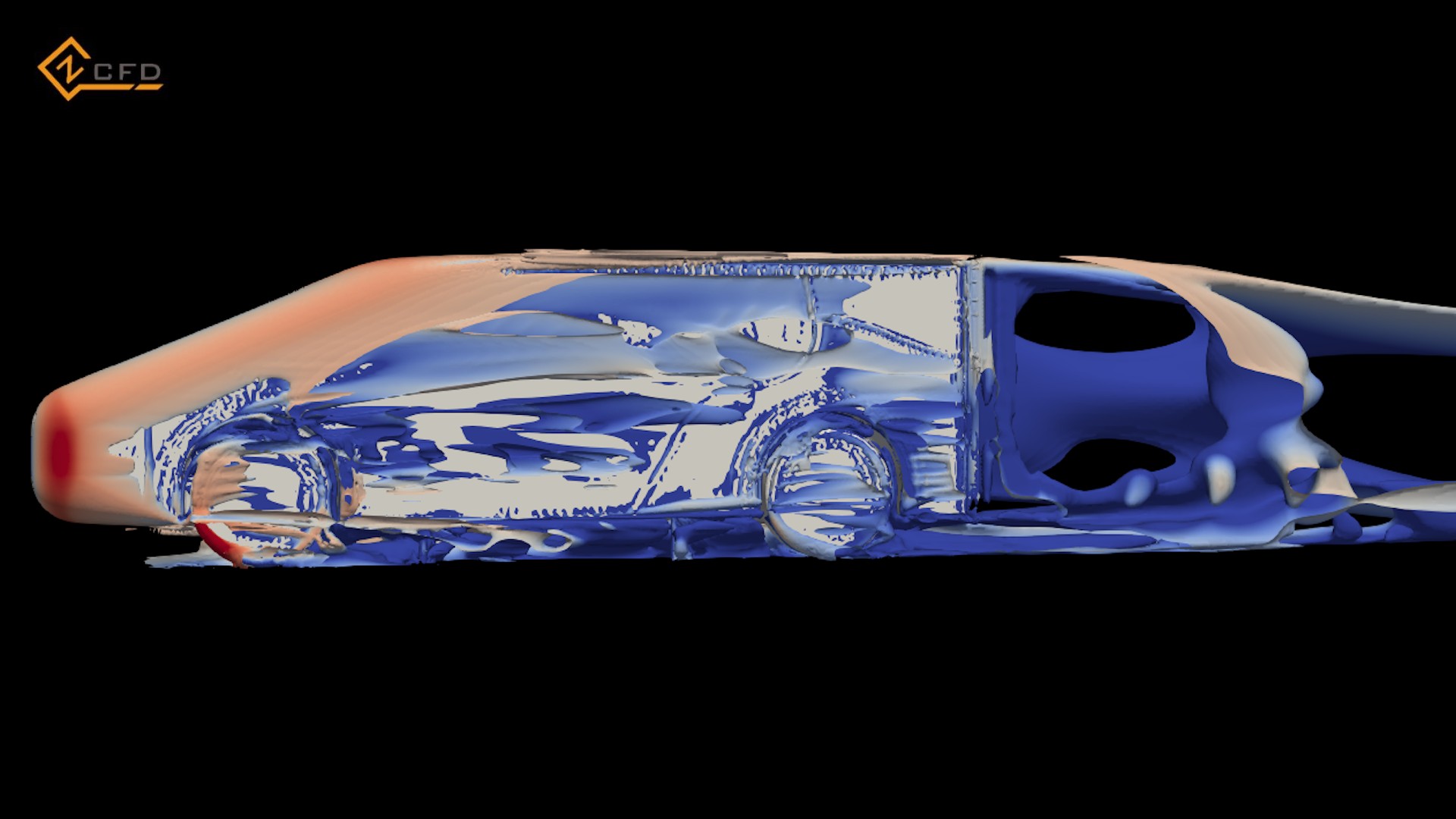
The team uses established benchmarks to validate zCFD’s performance. The Windsor body, a simplified vehicle-like shape in a wind tunnel commonly used in automotive aerodynamics, is a good example. Mandy shared, “With this test case zCFD consistently delivers strong validation results.”
These industry-standard test cases reassure end-users that zCFD has been thoroughly tested against known benchmarks. “For clients, it demonstrates the product has been constantly validated and that their simulations are built on a reliable foundation,” adds Oliver.
Building trust through testing
Ultimately, comprehensive test cases are about building trust. They ensure that when users run their critical simulations in zCFD, they can rely on accurate, consistent results, whether that’s optimising a wind farm layout, designing an aircraft component, or analysing vehicle aerodynamics.
Want to experience zCFD’s reliability for yourself?
Get in touch to discuss how zCFD can support your CFD needs.